.png)
By Ana Marendić, licensed tourist guide and art historian, Split, Croatia · Last updated: August 2026 · ~18 minute read
The best time to visit Split, Croatia is late May to mid-June or September to early October. These months are warm enough for the sea and outdoor dining, but with far fewer crowds than July and August and prices 30 to 40% lower than peak summer. If you want peak beach weather and don't mind crowds, come in July or August. If you want to experience Diocletian's Palace as a Roman monument rather than a cruise-ship destination, come in April, October, or November. Winter Split (November to March) offers the historic city at its most local and affordable, with genuine trade-offs (no beach, reduced ferry schedules, some closed restaurants). This guide covers every month with weather data, crowd expectations, cruise ship schedules, prices, festivals, and specific recommendations by traveller type, based on years of directly guiding visitors through Split across all seasons.
The single best week to visit Split is the last week of May or the first two weeks of September. Beach weather, warm sea, most attractions and restaurants operating fully, but crowds and prices meaningfully below July and August peaks. Cruise ship traffic is present but manageable. Light quality is at its best.
If flexibility is limited, any month from April through October is workable, with the specific trade-off being crowds vs. weather. April to May and September to October give you 80% of the summer experience with 40 to 50% of the crowds. July and August give you peak beach and party atmosphere at the cost of packed palace corridors and premium prices. November through March give you Split as a living local city, at a significant discount, without beach access.
The one type of visitor for whom timing genuinely matters is anyone travelling specifically for history and understanding the palace. For that purpose, April, October, and November are objectively better than peak summer, because the palace is quiet enough to actually see.
Yes. Timing your visit to Split changes what you experience more than for most European cities. Because Split's core attraction (Diocletian's Palace) is a small, dense space that gets fundamentally different when packed with cruise groups vs. empty at 7 AM, the same city can feel like two different destinations depending on when you visit.
Peak summer Split (July and August) is a Mediterranean party and beach destination with a Roman palace inside it. Shoulder season Split (April to May, September to October) is a Mediterranean historical city with a beach nearby. Winter Split (November to March) is a working Adriatic town where locals outnumber tourists three to one.
Which of these you want depends on why you're travelling. There's no universally correct answer.
Best months: Late May, June (first half), September. You get warm weather, swimmable sea, all attractions open, but crowds are manageable enough that you can actually see the palace and get restaurant reservations without difficulty. This is the recommendation for most people asking this question.
Best months: July, August, early September. Peak sea temperature (25 to 27°C), full nightlife, beach clubs open, boat rentals available, Ultra Europe festival (early July). Accept peak crowds and prices as the trade-off. Late June gives 90% of the experience with slightly fewer crowds.
Best months: April, May, October, November. The palace is a functional historical experience when it's quiet enough that you can hear a guide over 20 metres and photograph the Peristyle without crowds. In July and August, the same palace becomes a logistical challenge. This category of visitor gains the most from off-peak timing.
Best months: Late May, June, September. Warm weather without July and August intensity, manageable crowds, ferry rides and boat trips comfortable. Peak summer with young children requires serious shade and heat management. Beach access is what most families want; late May onwards provides it.
Any month during cruise season (mid-March to late October). Your dates are dictated by ship schedule. What matters is optimising your day in port, not choosing the month. See our Split cruise port guide for hour-by-hour planning.
Best months: May, September, October. Warm evenings for outdoor dining, walks through quiet palace streets after sunset, golden hour light. Prices below peak summer. May and September in particular have long comfortable evenings without the intense heat of midsummer.
Best months: November, February, March. Accommodation costs 50 to 70% less than peak summer. Flights are significantly cheaper. Restaurants are less busy so service is often better. Trade-off is no beach weather and some seasonal closures.
Best months: April, May, September, October. Enough tourist activity to meet people at walking tours, cooking classes, and boat trips, but not so overwhelming that solo travel feels lonely or expensive. Winter solo travel is also good if you want a contemplative trip and don't mind quiet evenings.
Best months: May, September, October. Golden hour light on palace stones is objectively best in shoulder seasons. In late September and October, the sun angle produces dramatic long shadows across Roman architecture. Peak summer light is harsh at midday and difficult to work with.
January is Split at its most local. The Riva is empty except for dog walkers. Cafés fill with residents drinking coffee slowly. Most Old Town restaurants remain open with regular hours; some in outer neighbourhoods close for two to three weeks around New Year.
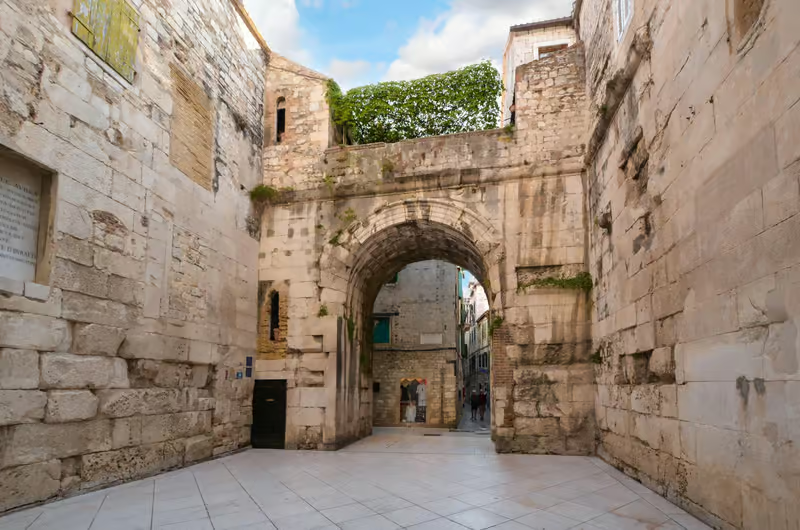
The palace in January is quiet enough to fundamentally change how you experience it. When you walk through the Peristyle without a group of forty people in front of you, you notice the architecture. The Cathedral of Saint Domnius is nearly empty. The cellars are cold and echo.
Time Walk operates year-round. January tours often run with 2 to 4 guests, close to a private experience for the group price. VR reconstructions of the palace in 305 AD look particularly dramatic when the real palace around you is quiet and empty.
Should you come in January? Yes if you want Split without tourists, understand you're not swimming, and can handle cool wet weather. Not the choice for a first visit unless you specifically want the atmosphere.
February brings Split Carnival (Splitski Karneval), one of Dalmatia's oldest traditions. Mid-February, the streets fill with masked processions, live music, and the ceremonial burning of Krnjeval (a straw figure blamed for the previous year's problems). If Carnival dates align with your trip, February stops feeling like a quiet month.
Days lengthen noticeably by late February. Genuine daylight until nearly 6 PM. Weather remains unpredictable: warm days reaching 15°C alternate with cold rainy stretches.
Should you come in February? Yes if Carnival dates work, or if you want the January experience with slightly more daylight.
March is when Split wakes up. Winter-closed restaurants reopen. First cruise ships arrive mid-month. Ferry schedules to islands expand. Palace attractions run regular hours but rarely crowded.
Weather is genuinely unpredictable. Three days of 18°C sunshine can follow two days of rain and 10°C. Pack layers.
For walking tours, March is one of my favourite months. Palace stones aren't yet hot, no crowds block narrow streets, and light quality is excellent. Day trips to Trogir, Klis, and Salona become practical as opening hours extend.
Should you come in March? Yes for spring weather without summer crowds. Accept unpredictability.
April is when I confidently recommend Split. Warm enough for outdoor cafés, cool enough that walking around the Old Town is comfortable. Trees are green, wisteria blooms along old streets, Marjan Hill is at its best for hiking.
Easter is significant. If Easter falls in April, book accommodation early for that week. Croatian families visit relatives; Italian holidaymakers take short breaks. Some restaurants close for family gatherings on Easter Sunday.
Cruise traffic increases substantially. On cruise days, the Peristyle can be crowded from 10 AM to 2 PM. Before 9 AM or after 3 PM, you get the palace back. This timing pattern matters throughout the entire cruise season.
Day trips work fully. Krka reopens for waterfall swimming (though water is very cold). Ferry connections to Hvar, Brač, and Vis run frequently enough for day trips.
Should you come in April? Yes. April is the beginning of Split's best travel window.
May is when Split gets seriously good. Weather is beach weather. Islands are warm. Marjan Hill is green and full of wildflowers. Long evenings appear, light in the sky until nearly 9 PM by end of month.
The palace becomes busy on cruise days. If you're planning serious palace exploration, early morning (7 to 9 AM) or evening (after 6 PM) are your best windows.
Late May in particular is my favourite time in Split. Warm but not punishing. Sea swimmable. But you avoid peak-summer prices and cruise ship saturation. If you can only visit Split once and want to see it in its best form, come the last week of May.
Should you come in May? Yes, especially the second half of the month. May is arguably the single best month.
June is fully summer. Beaches fill. Boat rentals expensive. Every Riva restaurant full every night. Ultra Europe festival buildup starts late June (party crowd arriving, pre-parties).
Palace has real crowds on cruise days. Peristyle genuinely packed 10 AM to 3 PM. Cathedral tickets sell out for morning slots by 9 AM. Be there by 8 AM or after dinner for manageable experience.
Weather is beautiful but hot enough that midday walking tours (12 to 3 PM) become uncomfortable. Time Walk shifts to mostly morning and evening tours in June.
June has the longest days of the year around summer solstice, light until nearly 9:30 PM. Sunset from Marjan Hill or the Riva at 8:45 PM is one of the most beautiful evening experiences in Split.
Should you come in June? Yes, especially the first half. Last month before Split becomes truly overwhelmed.
July is Split at maximum intensity. Ultra Europe takes over one weekend, bringing 150,000 electronic music fans. Cruise passengers pour into the Old Town daily. Beaches crowded 9 AM to sunset. Riva restaurants need reservations 3 days ahead.
The palace during July is a specific challenge. The Peristyle can have 500 people during cruise hours. Photographing without tourists in frame is essentially impossible 10 AM to 3 PM. Diocletian's cellars have queues.
If you must come in July, plan around crowds:
This rhythm makes July manageable and even enjoyable, but requires discipline.
Split Summer Festival runs July and August with theatre, opera, and concerts in the Peristyle and other Old Town venues. Watching classical music in a Roman courtyard on a July evening is genuinely memorable.
Should you come in July? Only if you specifically want peak summer, don't mind crowds, and have peak budget. Works but requires strategy.
August is functionally identical to July with one difference. Ferragosto (August 15) is an Italian public holiday that sends huge numbers of Italian holidaymakers to Croatia. Already-busy August gets an Italian accent in the week around Ferragosto.
Croatian locals largely leave the city in August. Many locally-owned restaurants close for 2 to 3 weeks so families can vacation on the coast themselves. This affects which restaurants are open and how the city feels.
For beach lovers, August is peak. Adriatic at warmest. Sunset later than most Northern European countries have all year. Fully Mediterranean holiday atmosphere.
For history and quiet exploration, August is difficult.
Should you come in August? Same answer as July. If flexible, choose different month.
September is one of Split's two best months (along with late May). Weather still summer, sea warm, but intensity of July and August drops noticeably. European school holidays end after first week, families with kids leave. City becomes manageable while still feeling summer.
Early September (first two weeks) has weather nearly identical to August with slightly fewer crowds. Late September (last two weeks) still has swimming weather but real cool evenings. Light jacket at dinner. Light quality changes and becomes golden.
Cruise ships continue frequently. Palace strategy remains: early morning or evening for manageable experience.
Palace stones in September light are especially beautiful. Photographers who understand Split come in late September for the light more than any other reason.
Should you come in September? Yes. September is arguably the second-best month after May.
Early October still has summer weather most days. Water warm enough to swim. Cruise season continues at peak until roughly October 20, then drops fast toward winter break.
Palace atmosphere in October is calmer than summer. You can walk through the Peristyle at midday without dodging tour groups. Cellars open regular hours, not crowded. Cathedral tickets easy to get.
Days shorten noticeably. By late October, sunset around 5 PM affects how much fits into daylight hours. Early morning starts become more valuable.
Late October brings first real rain days back. Storms can be dramatic. Warm sea meeting cool air produces thunderstorms visible over the water. Locals love autumn storms.
Should you come in October? Yes, especially in early October. Late October starts feeling like off-season, which is fine if that's what you want.
November begins Split's quiet season. Most cruise ships stop by early November. Tourist crowds thin dramatically. Some restaurants and cafés reduce hours or close for winter maintenance. But the city is very much alive with locals.
Weather unpredictable. Three days of 18°C sunshine can follow four days of rain and 12°C. Pack for both.
This is one of my favourite months for walking tours. Palace is quiet, light is soft and dramatic, and there's time to actually talk about things without being pushed along by crowds. When sun is out, temperatures pleasant for walking. When it rains, cafés cozy in a way summer never allows.
Advent u Splitu starts end of November. Split's Christmas market season begins.
Should you come in November? If you want quiet Split without crowds, yes. Accept weather variability, no swimming.
Advent u Splitu (Split's Christmas market) runs late November through early January. Stalls sell mulled wine, fritule (Croatian donuts), grilled sausages, craft gifts along the Riva and Old Town. Live music on weekends. Lights decorate Roman walls.
Genuinely charming if you like Christmas markets. Smaller than famous Central European markets but full of Adriatic atmosphere. Split's mulled wine has specific style with cloves and orange peel worth experiencing.
Weather cool but rarely brutal. Snow very rare. Bura wind can make cold days feel much colder. Pack proper wind-blocking jacket even if forecast temperature seems moderate.
For palace exploration, December is quiet and atmospheric. Cathedral holds Christmas masses in Latin and Croatian worth attending even for non-religious visitors, purely for the acoustics inside a 1700-year-old space.
Should you come in December? If you want Christmas market atmosphere with Mediterranean architecture, yes. Otherwise, better months exist.
Cruise ship traffic shapes Split's daily rhythm from mid-March through late October. Understanding this is essential for anyone visiting during those months.
Peak cruise months: June, July, August, September (20 to 35 ships per week)Building season: April, May (10 to 20 ships per week)Wind-down season: October first three weeks (10 to 15 ships per week, decreasing)Off-season: November through mid-March (almost none)
On cruise days, expect palace crowds from roughly 10 AM to 3 PM. Before 9 AM and after 4 PM, the palace becomes noticeably quieter. Restaurants near the Riva and palace fill during lunch hours on cruise days.
Strategic timing: If your visit falls in cruise season, plan palace exploration for 7 to 9 AM or after 4 PM. Middle of day is for beach, boat trips, day trips out of Split, or long lunches in interior konoba streets away from the tourist route.
The Split cruise port guide covers cruise passenger logistics in detail.
Split summers rarely have significant rain, but weather can shift. Here's how to adapt.
Extreme heat (35°C+, several days per July and August):
Rare summer rain:
Shoulder season rain (April, October, November):
Winter rain (November to March):
Mistake 1: Assuming July and August is automatically best. Peak summer has peak crowds, peak prices, and palace conditions that make it harder to actually experience Diocletian's Palace. For most visitors, June or September delivers a better trip.
Mistake 2: Assuming winter Split is dead. The city has real life year-round. Restaurants, cafés, and Old Town streets remain active with locals. Palace attractions run reduced but functional hours. Winter Split rewards visitors who understand what it offers.
Mistake 3: Booking peak season without accommodation reservations. July and August accommodation books out 2 to 3 months ahead. Waiting until 2 weeks before your trip in peak season means either paying premium prices or staying in inconvenient locations 30+ minutes from the palace.
Mistake 4: Skipping shoulder season because "the weather might not be perfect." Late May, June, and September deliver very high weather quality (75 to 80°F daytime highs, warm sea) with far fewer downsides than peak summer. The perceived risk of shoulder season weather is smaller than the real cost of peak season crowds.
Mistake 5: Not accounting for cruise ship schedules within your chosen month. Even in a "good" month, palace visits between 10 AM and 3 PM on cruise days feel completely different than the same palace at 7 AM or 6 PM. Structure your day around cruise arrival patterns rather than fighting them.
Mistake 6: Visiting in October and November without proper clothing. These months have genuinely variable weather. Packing only summer clothes and getting caught in an autumn rainstorm is uncomfortable and could have been avoided with 15 minutes of packing thought.
Mistake 7: Choosing month based on Instagram photos. The photos you've seen of Split were probably taken during peak season or golden hour. The city looks different at various times of year. Choose based on what experience you want, not what will match Instagram expectations.
Mistake 8: Underestimating summer heat impact on activities. Walking tours, palace exploration, and Marjan Hill hiking are much harder at 32°C than at 22°C. Peak summer requires early morning starts, midday rest, and evening resumption. Not the continuous daylong exploration schedule that works in shoulder seasons.
Time Walk runs guided walking tours through Diocletian's Palace year-round, with the exception of days with heavy rain (VR headsets and rain don't mix). Group tours run daily at 10:00 and 11:30 in high season; frequency reduces in winter months but tours still operate.
Private tours can be arranged for almost any date, including quiet winter days when you effectively have a licensed guide and Roman ruins to yourself. Private tours available in English, Italian, and Spanish.
Best months for the tour experience specifically:
For visitors travelling in peak summer, the 10:00 AM morning tour puts you inside the palace before the majority of cruise ship tour groups arrive. The 11:30 AM slot overlaps with cruise peak. Still works but the palace is busier.
Late May or September are generally the best months. Warm weather, swimmable sea, most attractions open, but far fewer crowds than July and August. Prices are also 30 to 40% lower than peak summer. For visitors specifically interested in Diocletian's Palace history, April, October, and November offer the quietest palace conditions with the trade-off of no beach weather in April or November's second half.
Yes. Winter Split (November to March) offers the historic city without tourists, at 50 to 70% off summer accommodation rates, with a genuinely local atmosphere. The palace is nearly empty. Restaurants remain open with regular hours in most cases. Split Carnival in February and Advent u Splitu (December Christmas market) are winter highlights. Trade-offs are no swimming, reduced ferry schedules to islands, occasional closed restaurants, and unpredictable weather. History-focused travellers often prefer winter Split.
November through early March. Cruise ships are essentially absent, tourist crowds are minimal, and the city has a mostly local atmosphere. The palace is quiet enough that you can hear your own footsteps in the Peristyle. October and April are moderately quiet. Some tourists present but manageable. Peak crowds are July and August, with early morning (7 to 9 AM) as your only reliable quiet window during those months.
July and August, both averaging 31 to 32°C daytime highs. Occasional heatwaves push above 35°C. If you're heat-sensitive, avoid these months entirely, or plan around midday shade. Early morning activities before 10 AM, indoor lunch during peak heat (12 to 4 PM), and outdoor evening activities from 6 PM onwards.
November, February, and early March are cheapest. Accommodation drops 50 to 70% below summer rates. Flights significantly cheaper. Restaurants less busy so service better. Trade-off is weather (no beach) and some seasonal closures. Late shoulder months (October) also offer 20 to 30% savings without giving up all warm weather.
Yes, most swimmers can enter the sea from mid-May onwards. Water temperature reaches 17 to 19°C by late May. Cool for the first 10 seconds but comfortable after adjustment. Local Croatians swim earlier (April and even March for the hardcore). By late May, general tourist swimming becomes comfortable and widespread.
Yes, especially in early October. Sea temperature stays around 20 to 22°C through most of October. Late October gets cooler at 19 to 20°C. Still swimmable for many, notably fresh for others. By early November, sea temperature drops below 19°C and only committed swimmers continue.
Cruise season runs from mid-March through late October (approximately 8 months). Peak cruise months are June through September with 20 to 35 ships per week. Building season is April to May (10 to 20 ships). Wind-down is October (decreasing). From November through mid-March, cruise traffic is essentially zero. One or two ships per month at most.
Yes, June is busy. Not as extreme as July and August but noticeably crowded, especially around the palace during cruise ship hours (10 AM to 3 PM). Late June approaches peak-summer intensity as Ultra Europe party crowds begin arriving. Early to mid-June is manageable with morning-focused schedules.
July and August have the warmest water (25 to 27°C) and warmest weather. Beaches are also most crowded then. For a balance of good beach weather and fewer crowds, aim for early June or September. Sea temperature 23 to 24°C, weather warm, but crowds meaningfully lower than peak summer.
July and August: 2 to 3 months ahead for good options at reasonable prices. May, June, September: 1 to 2 months ahead recommended. April, October: 3 to 4 weeks ahead usually sufficient. November to March: 1 to 2 weeks ahead is fine except during Carnival (February) and Advent (December weekends).
April averages 11 to 19°C with occasional warm days reaching 22°C and cool days around 14°C. Rain possible but not frequent (8 rain days on average). Sea temperature 14 to 16°C. Cold for most swimmers. Real spring weather, wisteria blooming, Marjan Hill green and pleasant for hiking. Easter (moveable) can make one specific week busier.
Early October yes (22°C average high), late October moderately (17 to 18°C average). Evenings become noticeably cool by mid-month. Water temperature 21°C through mid-October, dropping to 19°C by month end. Great for walking and sightseeing; borderline for swimming by late October.
Snow in Split is rare. Happens once or twice per winter, usually briefly, rarely accumulates. When it does snow, the city stops in a charming way because nobody is used to it. Bura wind (strong cold northeast wind) is much more common than snow and can make cold days feel much colder.
Advent u Splitu is Split's annual Christmas market. Runs late November through early January. Stalls on the Riva and Old Town streets sell mulled wine, Croatian holiday foods (fritule, grilled sausages), and craft gifts. Live music happens on weekends. Lights decorate Roman walls. Smaller than famous European Christmas markets (Vienna, Prague) but distinctive Adriatic atmosphere.
Split Carnival (Splitski Karneval) happens in February, usually the week leading up to Ash Wednesday. Exact dates vary year to year based on Easter calendar. Parades and masked processions in the Old Town. Culminates with ceremonial burning of Krnjeval (straw figure). One of Dalmatia's oldest traditions and worth planning around if February dates work.
Most major attractions open year-round with reduced winter hours:
Yes. Even a single day gives you the palace, the Riva, historic streets, and lunch at a local restaurant. Enough to fall in love with Split. Not enough to fully explore, but plenty to know if you want to come back for longer. See Split cruise port guide for single-day planning tactics, or best things to do in Split for a compressed itinerary.
Three days is the ideal for most travellers. One day for the palace and Old Town, one for a day trip (Trogir, Klis, Salona, Krka, or an island), and one for beach and Marjan Hill or a second day trip. Two days is workable but rushed. Four days lets you add an overnight island stay. Our 3 days in Split itinerary covers this in detail.
Croatian Independence Day is October 8. It's a public holiday so some businesses close, but the city otherwise operates normally. Not a major disruption for visitors. Statehood Day (May 30) is a similar situation. Public holiday with some closures.
Jellyfish appear periodically in Adriatic waters. Most commonly late summer (August, September). Not consistently present. When they do appear, local news and beach flags warn swimmers. Stings are usually mild. No need to plan travel around jellyfish concerns.
May, September, and October for light quality. Golden hour is longer and more dramatic in shoulder seasons than in peak summer's harsh midday light. Sunset colours are particularly good in October when weather turns from summer stability to autumn variability. For architecture photography, early morning in any season works better than midday.
Yes. Split is a fully tourism-oriented city year-round. English is widely spoken in restaurants, hotels, and tourist services. Winter locals in cafés may switch to Croatian conversations more than in summer when everyone's ear is tuned to English, but service in English is universal. Italian and German also widely spoken by tourism staff.
Very similar. Split's sea temperature closely tracks nearby islands (Brač, Šolta, Hvar). Difference is usually 0.5 to 1°C at most. Islands may feel warmer psychologically because there's less industrial coastline than in Split port area, but actual temperatures are essentially the same in nearby waters.
Ana Marendić is a licensed tourist guide (turistički vodič) and art historian registered with the Croatian Ministry of Tourism and Sport. She conducts walking tours of Diocletian's Palace and Split's historic centre as the resident guide for Time Walk, a VR-enhanced walking tour of the palace. This guide reflects direct experience guiding visitors through Split across all seasons, refined based on visitor feedback about what actually works throughout the year.
Weather and sea temperature data reflect Croatian Meteorological and Hydrological Service (DHMZ) historical averages. Cruise ship schedules based on Split Port Authority published data. Pricing reflects verified August 2026 conditions and is subject to seasonal variation. Festival dates verified through Split Tourist Board. Traveller type recommendations based on the author's direct experience with hundreds of visitors across all seasons. Time Walk is disclosed transparently as the author's employer; where alternative timing or approaches serve a specific visitor better, this is stated directly.
Ready to plan your visit and see Diocletian's Palace properly? Book Time Walk for €25, 80 minutes, licensed Croatian historian, small groups, ★ 5.0 across 170+ verified reviews. Includes Meta Quest 3 VR reconstructions of the palace as it stood in 305 AD.
Or browse more from our blog:
.png)